
You've Been Told You Might Have Sleep Apnea. Here's What Happens Next
July 29, 2026
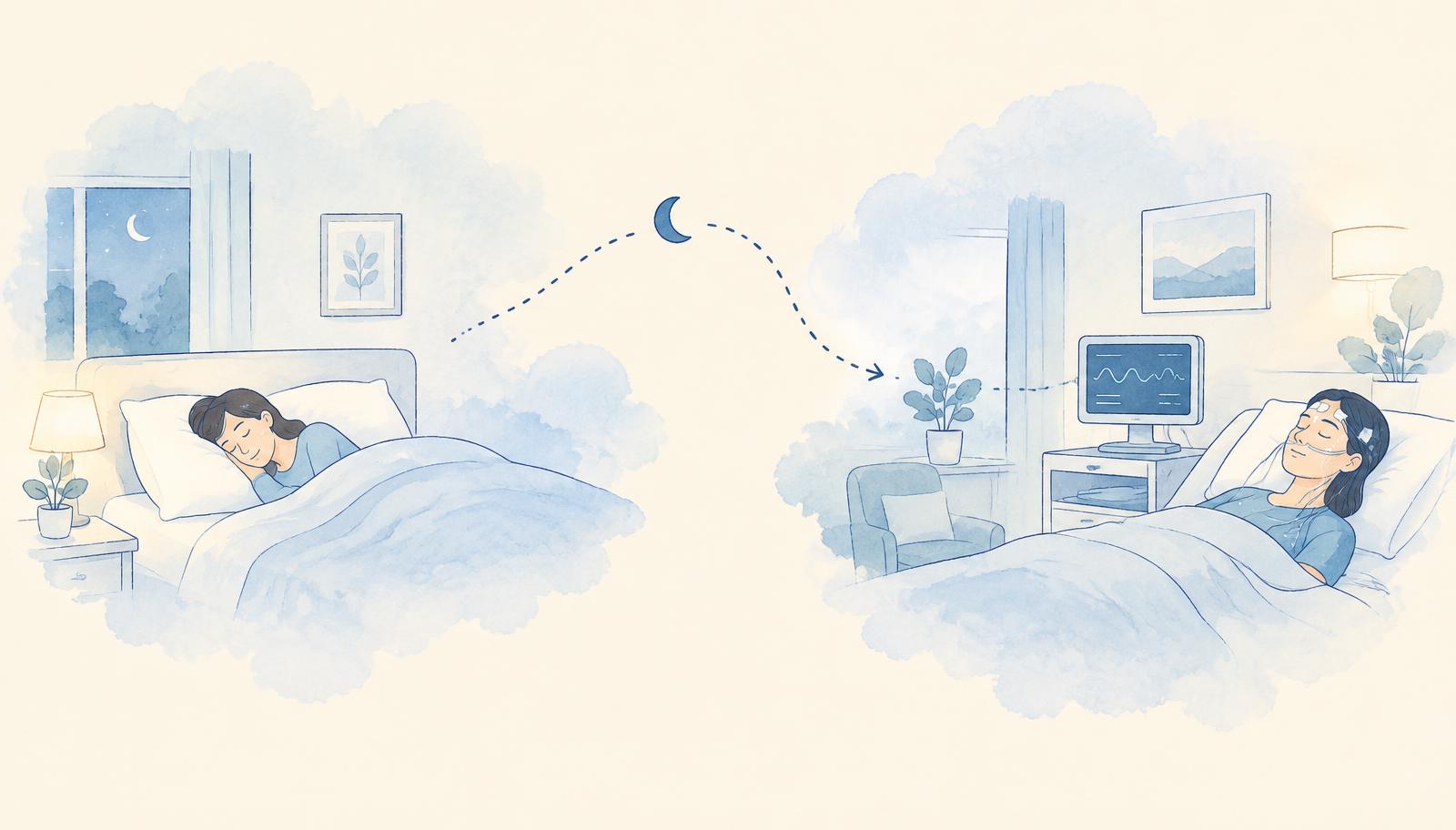
Maybe your doctor mentioned it. Maybe a partner finally said something about your snoring, or you took the self-check in our last article and a few things hit home. Now you've heard the words sleep apnea — and you're not quite sure what comes next. That uncertainty is the part that stops a lot of people. So let's clear it up.
Getting tested and treated for obstructive sleep apnea, or OSA — a common sleep problem where the throat relaxes and blocks the airway over and over during sleep — is more straightforward than most people expect. It's not surgery. For most people it doesn't even mean a night away from home. It's a short, well-worn path: a simple test, a clear set of results, and a treatment plan built around your life.
Here's each step, in plain terms.
Step one: a sleep test you can often do at home
Many people picture a sleep study as a night in a hospital lab, covered in wires. For most adults today, testing actually starts at home, in your own bed. We send you home with a small device and easy instructions. You wear it for one night while you sleep like always. It quietly tracks things like your breathing, your oxygen levels, and how often your breathing pauses.
The next morning you return the device, and our team reads the results. There are no needles and no overnight hospital stay for this first step. Some people do need a more detailed study in a sleep lab — usually when the picture is more complicated — but for most, the at-home test is all it takes to get a clear answer.
That answer comes back as a few numbers. The most important one has a name worth knowing.
Step two: what the numbers mean
The main number from a sleep test is called the AHI — the Apnea–Hypopnea Index. In plain words, it counts how many times each hour your breathing either stops or gets very shallow while you sleep. The higher the number, the more your sleep is being interrupted.
Here's the simple scale we use. Under 5 times an hour is considered normal. From 5 to 14 is mild sleep apnea. From 15 to 29 is moderate. And 30 or more is severe. So if your test comes back at, say, 22, that means your breathing is being disrupted about 22 times every hour — moderate apnea, and a clear reason you've been waking up tired.
You don't need to memorize any of this. We'll walk you through your own number, what it means for you, and what we'd suggest. The number isn't a verdict — it's just the starting point for a plan.
Step three: what treatment actually looks like
The most common and most effective treatment is a CPAP machine (short for continuous positive airway pressure). It's a small bedside device connected to a soft mask you wear at night. It gently sends a steady stream of air to keep your airway open while you sleep, so your breathing doesn't keep stopping. Today's machines are quiet, the masks are smaller and more comfortable than the old ones, and many people feel the difference in their energy within days.
CPAP is the first choice for most people, but it's not the only one. For milder cases, a custom oral appliance — a bit like a retainer that keeps your airway open — can work well. Losing even a modest amount of weight, changing your sleep position, and treating allergies or nasal stuffiness can all help too. And we adjust things over time. If the first setup isn't comfortable, we work with you until it is.
Sleep apnea is one of the most treatable sleep conditions there is. Most people who stick with treatment feel noticeably more rested — often within the first few weeks. The goal isn't to hand you a machine and send you off. It's to find the treatment you'll actually use — because the one that works is the one that fits your life.
Ready for answers? We'll take it one step at a time
If sleep apnea is on your radar, the Chest & Sleep team is here to make the next step easy. We'll talk through your symptoms, set up a sleep test when it makes sense, explain your results in plain language, and build a treatment plan around you. No pressure, no rush — just a clear path to sleeping, and feeling, better.
This article is for education only and isn't a substitute for medical care. Questions about your situation? Call the office — we're happy to help.